
Behavioral principles
The Psychology of Fintech Incentives: A Practical Design Guide
In this article
You can offer a generous reward and still get very little response. The effort of getting started may matter more to a customer than the benefit you're promising.
Behavioral science studies how people make decisions and what influences their actions. It helps explain why we put off things we want to do, or stick with a familiar choice when another option could serve us better.
For fintech teams, these principles give you a practical way to improve incentives. You can investigate what makes an offer hard to follow through on, then change that part of the experience. A clearer first step might help. So might showing the benefit sooner.
Understanding the barrier also helps you spend your reward budget more carefully. Increasing a bonus costs money without necessarily resolving the problem that stopped someone from acting.
This guide explains the behavioral principles behind those decisions and how to apply them in your fintech. Each section connects an idea to a product choice, with examples and ways to test whether the change helps your customers.
Define the action you want customers to take
“Improve engagement” leaves too much open. A customer checking their balance more often could be getting value from your product. They could also be worried about a missing payment.
Describe an action you can observe, including the situation in which it should happen. For a savings feature, that might be: a customer who has received income moves some of it into their chosen goal within two days. Now you can investigate a specific decision.
Separate starting from continuing. Someone who hasn't made a first transfer may need reassurance about where the money goes. Someone who already saves may need a schedule that fits irregular income. Offering both people the same bonus assumes they have the same problem.
Write down what you think is stopping each group. Treat that explanation as a hypothesis. A drop-off chart tells you where people leave; watching a customer attempt the task can help explain why.
Find the barrier before choosing a reward
The COM-B model, developed by Susan Michie and colleagues, groups the conditions for behavior into capability, opportunity, and motivation. Use it to look beyond whether an offer sounds attractive.
| Condition | What to investigate in a fintech product |
|---|---|
| Psychological capability | Does the customer understand which transfers qualify? |
| Physical capability | Can they operate the verification flow with their accessibility needs? |
| Physical opportunity | Do they have available money when you ask them to save? |
| Social opportunity | Does a shared household budget allow this decision? |
| Reflective motivation | Do they believe the product is worth using? |
| Automatic motivation | Do they reach for their usual payment app without considering yours? |
These conditions interact. Successfully completing a transfer can improve someone's understanding and make the next attempt less daunting.
The model helps you decide what to investigate. It doesn't tell you how much a change will improve conversion. If customers lack available money, test the timing of the request. If they don't understand the offer, test a clearer explanation before increasing the bonus.
Remove the effort that stops users from acting
Try completing your own offer as a new customer. Follow the link from the message. Work out which payments count. Notice anything you have to remember for later.
It's easy to call this one task when you're planning the campaign. For the customer, it may involve several decisions before they can even begin.
Fogg's behavior model explains why a willing customer might still do nothing. Motivation needs to meet ability at the moment a prompt arrives. If someone can't work out what to do, a reminder may just send them back to the same confusing screen.

Look closely at the step where people leave. If the offer requires a first card payment, take customers to the card setup they still need to finish. If they're unsure which purchases qualify, explain that before they spend.
A bonus can make the effort worthwhile. Reducing unnecessary effort gives you another way to help them start.
Give new users a small win
A new customer has already spent time opening an account. Asking them to commit more before receiving any benefit gives them another reason to leave it until later.
Present bias is our tendency to give extra weight to what happens now. You can work with it by offering a benefit someone can experience while trying the product.
Wise did this with a discount on an invited friend's first transfer. The friend could use the discount on a smaller transfer, even if that transfer didn't qualify the sender for a referral reward. Trying the service required less commitment than completing the full referral offer.

The important distinction is between a cost felt now and a benefit felt later. A customer may intend to set up saving next week, then postpone again when next week arrives. That's the kind of reversal present bias helps explain.
An immediate preference alone doesn't establish bias. Someone may need that money for a bill, or doubt that a promised reward will arrive. Ask about those constraints before treating delay as a motivation problem.
Think about what a customer could reasonably finish on their first visit. A first-use reward should help them try the thing they came for. If they need to make several large payments to get there, you've made the benefit distant again.
Tell users immediately when they've earned a reward
Suppose a customer pays with your card and earns cashback. If the cashback appears quietly in a balance days later, they may never connect it with that purchase.
Make the result visible while the action is still fresh. Show the reward beside the payment that earned it. The customer can then understand what happened without searching through their account.

This is a feedback decision as well as a payout decision. You may need to wait for a transaction to settle before releasing the money. You can still acknowledge the transaction and explain that the reward is pending.
Use words that match its actual status. “Cashback pending” tells someone there is a wait. “Cashback paid” tells them the money is available. Keeping that distinction clear helps customers trust the next offer.
Feedback also helps customers learn the rules. A reward beside an eligible purchase shows which action counted. If a payment doesn't count, explain the reason there too. Otherwise, the customer has to infer your rules from an unpredictable balance.
To test feedback timing, keep the reward amount and payout date the same. Change when the acknowledgment appears. That lets you investigate the value of a clearer connection without confusing it with the value of getting money sooner.
Show users how much is left to earn a reward
The beginning of a challenge asks someone to commit. Near the end, they may only need a small push to finish.
Researchers studying loyalty programs have observed people making purchases more frequently as they approach a reward. This is called the goal-gradient effect: getting closer to a goal can increase the effort we're willing to put in.
Give customers a way to see that distance. “Two payments left” is easier to act on than a reminder that they're enrolled in a campaign.

Give customers credit for completed steps
A related idea is endowed progress: people begin with some progress already recorded. In a coffee loyalty experiment, customers given a 12-stamp card with two starter stamps completed it faster than those given an empty 10-stamp card. Both required ten purchases.
For a fintech onboarding challenge, you could count a setup step the customer has genuinely completed. Show why it counts and what remains. Adding imaginary progress would make the rules harder to trust.
For a long savings challenge, show a nearer milestone as well as the final target. Someone may be months from finishing, but close to completing this week's contribution.
The target still needs to make sense. Use spending requirements that fit normal purchases. Encouraging someone to buy things they don't need is a poor way to introduce the value of your product.
Let users name what they're saving for
Money put aside for rent doesn't feel quite like money available for a meal out. We assign it a job, and that changes how willing we are to spend it. Behavioral researchers call this mental accounting.
A savings goal can give customers a similar distinction inside your app. When someone names a goal “moving home,” their next contribution goes toward something they can picture.
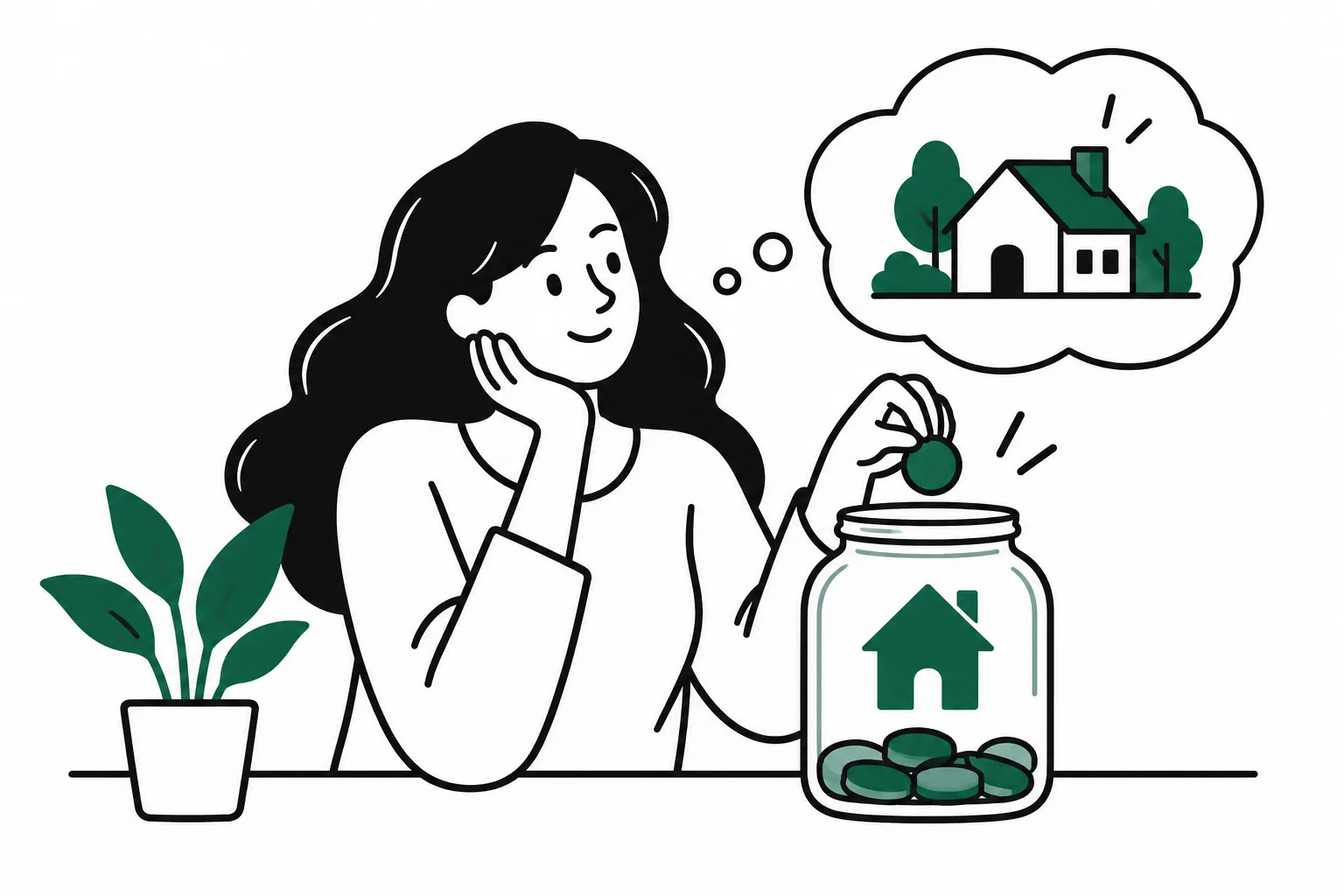
Simple tested a savings product under different descriptions. Calling it a savings goal increased people's stated interest compared with a conventional product label. The study measured interest; a product team could take the next step by measuring actual deposits.
Let customers choose their own purpose. Keep it visible when they contribute so they can see what the money is for. If the account limits withdrawals, explain that clearly too.
Naming money and restricting access are separate design choices. A label gives a balance a purpose. A withdrawal restriction changes what the customer can do with it. You can test the label without introducing a lock.
Measure money coming into the product as well as money moving between its pockets. A new goal might help someone organize existing savings without increasing how much they save. That's useful, but it answers a different product question.
Send reminders about the customer's own goal
People don't need to stop caring about a goal to forget it. A future expense is easy to overlook when today's bills need attention.
A reminder brings it back into the decision. In savings experiments, reminders helped people follow through. In one setting, mentioning the person's specific saving purpose worked better than sending a generic message.
Apply this to the goal your customer chose. Refer to their moving fund when asking them to make a contribution, and link to the place where they can do it. The message has a job beyond getting them to open the app.
Check for recent contributions before sending it. If someone has already done what you're asking, another reminder gives them a reason to ignore future messages.
Help customers decide when they'll act
An intention such as “I'll save more” leaves the next decision unresolved. An implementation intention connects a recognizable situation to a specific response: “When my salary arrives, I'll move $20 into my moving fund.”
Research by Peter Gollwitzer and Paschal Sheeran examines how these if–then plans help people follow through. Deciding in advance gives someone a cue to recognize and an action to take when it occurs. The customer still needs to want the goal and be able to act.
In your product, let customers choose the moment that fits their life. Someone paid irregularly may choose each incoming client payment instead of a monthly date. A reminder can then refer to the plan they made.
Start with a plan the customer can carry out. “Save when you can” gives them another decision. A specific amount after a recognizable event makes the next step clear. If circumstances change, make that plan easy to edit.
Make it easy to restart a savings challenge
A streak can make a customer proud of their progress. Then an expensive week happens. If the app treats that interruption as failure, it can make returning feel harder than it needs to be.
Build a way to continue into the challenge. Up let customers take a rest week. Monzo allowed catch-up for missed contributions. These options acknowledged that a saving plan sometimes needs to change.

Keep the savings already accumulated on display. Explain what the customer needs to do next and whether the pause affects the reward. They should be able to make a new plan without working through the rules from scratch.
Offer a new starting point after a pause
The fresh start effect gives you another possible moment to invite someone back. Research by Hengchen Dai, Katherine Milkman, and Jason Riis found increased goal pursuit around landmarks such as the beginning of a week or month. Such boundaries can help people see a new attempt separately from past setbacks.
For a paused saver, try an invitation to choose a manageable contribution for the new month. Keep their accumulated savings visible. Measure whether they resume and continue; an increase in restarts alone doesn't show that the new plan lasts.
Our savings campaign examples show how different fintechs handle interrupted progress.
Give people a referral their friend will appreciate
When someone recommends your app, their friend may ask why. “I use it and you get a discount on your first transfer” is an easier conversation than explaining a complicated bonus they earn for recruiting someone.
There is a social cost to recommending a product. The sender risks looking self-interested or giving bad advice. A useful benefit for the friend can make the invitation more comfortable to share.

Wise's first-transfer discount gave invited friends a reason to try the service. Other fintech referral programs paid both people after the friend completed a qualifying action.
Keep that action easy to explain. Before adding another condition, consider whether a customer would feel comfortable walking a friend through it. Make the sender's reward visible so nobody discovers the arrangement afterward.
Use surprise when the reward is an extra benefit
Waiting to discover a reward can be part of its appeal. Some Revolut referral offers used this approach: customers completed the requirements, then found out which reward amount they received.
A reveal gives the customer something to anticipate. It also makes the value less certain, which matters when you're asking them to commit money or effort.
Use a fixed reward when someone needs to decide whether the offer is worth that commitment. Consider a variable reward for a small extra benefit on an action that's already useful. Show the possible amounts and their probabilities before the customer starts.
A prize draw needs a different explanation because a participant may receive nothing. The prize campaign guide covers those mechanics in more detail.
Work out the reward's expected value before deciding how to present it. Suppose an illustrative offer pays $1 to 90% of recipients and $10 to the remaining 10%. Its average payout is $1.90 per recipient. Most people still receive $1.
That average helps you budget. It doesn't tell you how attractive the offer will feel, or whether a customer will be pleased with the result. Compare it with a fixed $1.90 reward if you want to test uncertainty at the same expected payout. Measure repeat use and complaints alongside initial participation.
Tie repeat use to a moment that already happens
Saving after payday gives an action a place in someone's life. The arrival of income becomes a cue to put some aside.
Choose a recurring situation where your product helps. A first-use incentive can encourage the customer to try it in that situation. The next time it happens, they have an experience to return to.
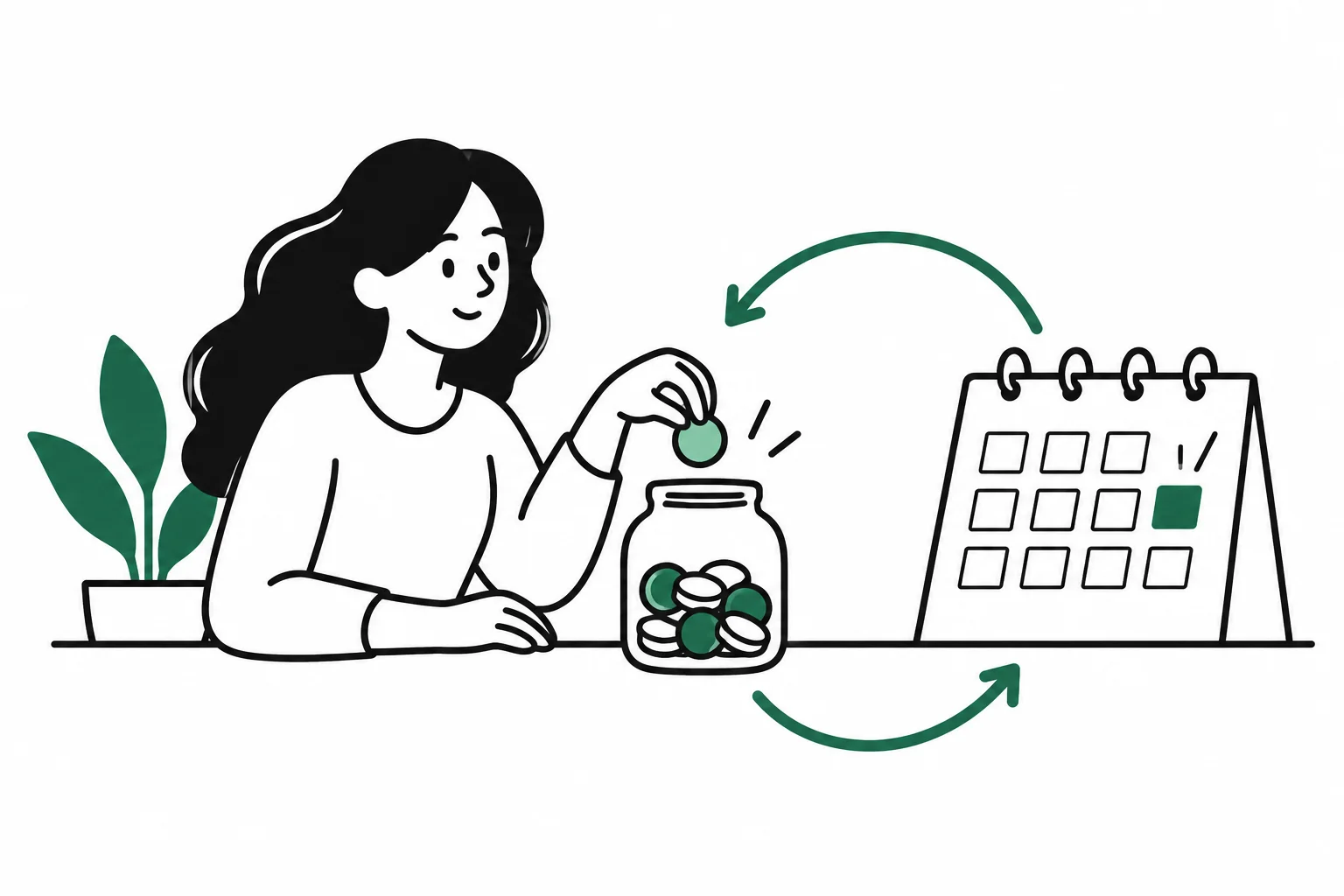
Automation can reduce the effort of continuing. Monzo's daily saving challenge moved money automatically in increasing amounts. Customers didn't have to remember a transfer each day.
That changes what you should measure. For automatic saving, check whether customers keep the feature enabled and retain the money. For a payment product, look for another occasion when they choose to pay with it.
Repeat use during a promotion doesn't establish a habit. Follow what happens once the bonus is gone.
Choose defaults customers can comfortably keep
A default is the option someone gets if they leave a choice unchanged. It can spare them a decision, but it can also become the setting they keep long after setup.
Brigitte Madrian and Dennis Shea studied a retirement plan that introduced automatic enrollment. Participation rose, and many employees stayed with the default contribution rate and investment allocation. Their findings point to inertia and the possibility that people interpret a default as advice.
For a fintech savings feature, this makes the suggested contribution an important choice. An editable amount can simplify setup. Show the schedule and get the customer's agreement before moving money. Make the setting easy to find afterward.
Judge a default by what happens beyond acceptance. Look for quick reversals or customers moving the money straight back. A setting that attracts more enrollments may still be a poor fit for the people accepting it.
Keep the customer's own reason for using the product visible
A reward adds a reason to act. It can also change how someone interprets the action. Research reviewed by Uri Gneezy, Stephan Meier, and Pedro Rey-Biel describes situations where payment weakens an existing motive, including social motives. This is often called motivation crowding out.
Consider a referral. A customer may be happy to recommend a tool that helped them. A campaign focused entirely on what they earn could make the same recommendation feel like selling to a friend. That's a possibility to investigate, rather than a reason to assume paid referrals fail.
Ask what the customer values once payment stops. If saving gives them a buffer for an unpredictable bill, keep that benefit visible during the promotion. A bonus can help them get started while the product continues to serve that purpose.
Let customers choose a plan they value
Self-determination theory, developed by Edward Deci and Richard Ryan, offers a useful way to examine the experience:
| Psychological need | What it means | A product decision to consider |
|---|---|---|
| Autonomy | Feeling that the action is your choice | Let customers choose a savings amount and revise it. |
| Competence | Feeling able to make progress | Show what a contribution has achieved and how to continue. |
| Relatedness | Feeling connected to other people | Support a shared goal when customers want one. |
The theory also distinguishes doing something for enjoyment from doing it because you personally value the outcome. Customers don't have to enjoy making transfers to care about building savings. Help them see how using the feature serves a goal they've chosen.
Test whether the incentive changed behavior
It's tempting to look at everyone who earned a reward and count them as a campaign success. Some of those customers would have acted anyway.
Randomly assign eligible customers to receive the campaign or join a comparison group without it. Track the same action over the same period. The difference gives you an estimate of how much activity the campaign added.
If you want to understand the bonus itself, compare the same message with and without the reward. A comparison against no message measures the whole campaign's effect. Decide which question matters before launching, and allow for uncertainty when interpreting the results.
Calculate the cost of an additional customer
Consider a hypothetical campaign with 1,000 eligible customers randomly assigned to each group. In the reward group, 150 complete the action. In the comparison group, 100 do.
| Measure | Calculation | Result |
|---|---|---|
| Completion rate with reward | 150 ÷ 1,000 | 15% |
| Completion rate without reward | 100 ÷ 1,000 | 10% |
| Estimated lift | 15% − 10% | 5 percentage points |
| Estimated additional customers | 5% × 1,000 | 50 |
| Reward cost at $5 per completion | 150 × $5 | $750 |
| Reward cost per additional customer | $750 ÷ 50 | $15 |
You paid 150 people, including people who might have acted anyway. The estimated extra activity is what you bought with that spend. Compare its value with the full campaign cost, including delivery and support. The $15 figure is an estimate; uncertainty in the lift also affects the cost estimate.
Keep every assigned customer in the analysis, including people who never opened the message. Comparing only reward claimants with everyone else selects customers who have already succeeded. This intention-to-treat approach measures the effect of offering the campaign to the eligible audience.
Check whether the campaign moved activity forward
A deadline can bring next week's payment into this week. That produces a campaign-period lift without increasing total activity over a longer period.
Choose a follow-up window that covers the customer's normal usage cycle. For a monthly income product, a few days after the reward ends tells you little. For savings, subtract withdrawals and exclude the bonus itself when measuring the customer's contribution.
Decide the main outcome and observation window before launch. Report the range of plausible effects alongside the estimate. If the range includes both a worthwhile gain and no gain, you don't yet have a clear answer.
Choose one change to try in your product
Open a campaign you're running or planning. Find the part where you're asking the most of the customer. Consider what would make that particular step easier to complete.
You might bring the first reward forward. Or you might find that customers can't tell whether their payments have counted. Those are different problems and need different changes.
Use the problem you've observed to narrow the experiment:
| What you observe | A change worth testing | What to measure |
|---|---|---|
| Customers leave while reading eligibility rules | Explain the qualifying action beside the offer | First qualifying actions per eligible customer |
| Customers set goals but make no contribution | Let them choose an amount and a time to act | Contributions after the chosen cue |
| Customers stop near the reward threshold | Show the remaining qualifying actions | Completions, plus spending after the offer |
| Savers leave after a missed contribution | Offer a manageable restart without erasing progress | Resumed contributions that continue |
| Customers act only while bonuses are available | Help them try the product in a recurring, useful situation | Use across later cycles without a bonus |
Write the hypothesis plainly: “Customers postpone their first contribution because they haven't chosen a time. Letting them make a payday plan will increase first contributions.” That gives you a claim you can investigate. If it fails, revisit the explanation before adding another incentive.
Choose one change to test. You can use the fintech campaign examples for ideas, then work through the details in the reward delivery guide.